
If you run a small business with a limited marketing budget, the SEO vs PPC question comes up quickly. Both put you in front of people searching on Google, but they work in very different ways, cost money in different ways and pay off on different timelines.
Most businesses eventually benefit from both. The real question is which one to start with. This guide covers how each channel works, where each one shines and a simple framework for deciding.
How SEO and PPC actually work
Search engine optimization (SEO) is the work of making your website more likely to appear in Google’s unpaid, organic results. That includes keyword research, better pages, technical fixes, a strong Google Business Profile and earning links from other sites. You do not pay Google for these clicks. You pay in time and expertise.
Pay-per-click advertising (PPC) means bidding to place ads above or beside the organic results, on platforms like Google Ads and Microsoft Advertising (formerly Bing Ads), and on social networks. You pay each time someone clicks your ad. The price of each click is set by an auction that weighs your bid and the quality and relevance of your ad and landing page.
In short, SEO earns visibility and PPC rents it. That one difference drives almost everything else in this comparison.
SEO vs PPC: speed versus compounding
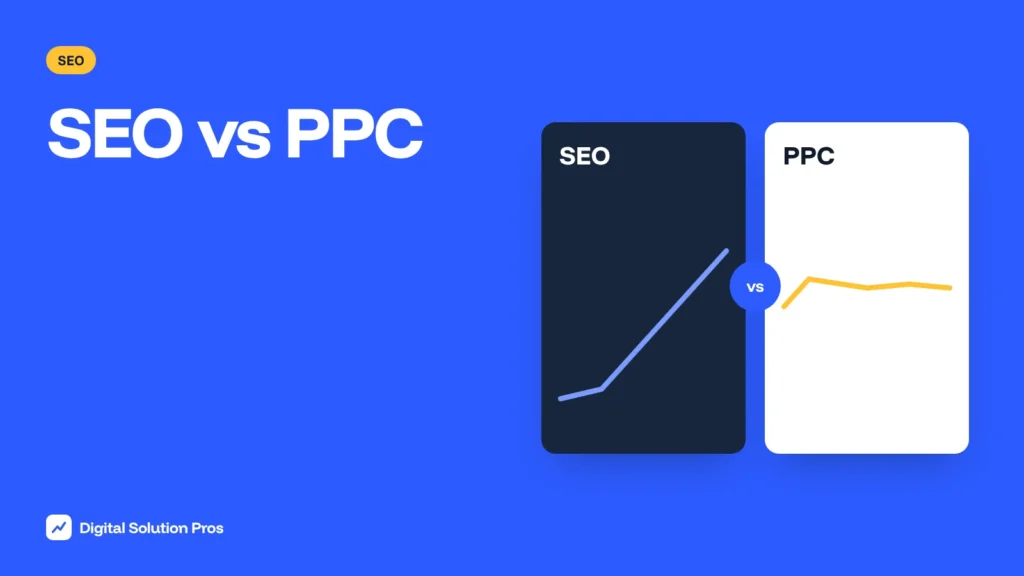
The biggest practical difference in SEO vs PPC is timing. A well-built PPC campaign can start sending visitors the same day it goes live. You control the keywords, locations, hours and budget.
SEO is slower. Google needs time to understand your pages, and you need time to build authority that outranks established competitors. Meaningful organic growth usually takes several months.
The trade-off is what happens after. When you stop paying for ads, the ad traffic stops. When a page ranks well organically, it can keep bringing in visitors for a long time with only maintenance. Good SEO work compounds: each helpful page, fixed technical issue and earned link adds to what came before.
How the costs compare
Neither channel is free, but the cost structures differ.
With PPC, your costs are direct and variable:
- Ad spend paid to the platform for each click
- Management time or fees for building, monitoring and improving campaigns
- Landing pages that convert well enough to justify the spend
In crowded industries, high-intent clicks can be expensive, and a poorly managed account can burn through a budget fast.
With SEO, your costs are mostly upfront and ongoing labor:
- Keyword research and strategy
- On-page improvements and new content
- Technical fixes, such as site speed and Core Web Vitals
- Local SEO work and link earning
There is no per-click charge, so over the long run organic traffic often becomes a more cost-efficient source of leads. The catch is that you pay before you see much return.
When to start with PPC
PPC is usually the better first move when you need results now or need to learn quickly. Consider leading with paid search if:
- Your website is brand new. A new domain has little history with Google, so organic rankings take time. Ads can bring in customers while SEO builds.
- You are launching something. A new product, service, location or seasonal promotion has a short window, and PPC lets you show up immediately.
- You want to test offers. Ads let you compare headlines, prices and calls to action quickly, so you learn what your market responds to before you invest in long-form content.
- You need leads to keep the business moving. If cash flow depends on the phone ringing this month, waiting on SEO alone is risky.
Before you put more money into ads, make sure the account is set up properly. DSP offers a free PPC audit that reviews your existing campaigns for wasted spend, weak targeting and missed opportunities.
When to lean on SEO
SEO deserves the bigger share of your attention when you are building for the long term. Lean toward SEO if:
- You can plan for months ahead, not weeks. If ads or referrals already cover your short-term needs, SEO is a strong investment for the future.
- Your customers research before they buy. Service businesses, B2B companies and higher-priced purchases benefit from helpful content that answers questions early in the buying process.
- Ad costs in your industry are high. When clicks are expensive, every visitor you earn organically is one you do not have to pay for.
- You serve a local area. Local SEO and a well-maintained Google Business Profile can help you appear in map results for nearby searches.
A solid search engine optimization program also strengthens your site in general. Faster pages, clearer content and better structure make your ads perform better too.
How SEO and PPC work together
Treating SEO vs PPC as an either-or choice leaves value on the table. The two channels feed each other in several practical ways.
Ad data informs your SEO
PPC search term reports show the exact phrases people typed before clicking your ads, and which ones led to calls, forms or sales. Instead of guessing, you can prioritize SEO content for terms that have already proven they convert.
Remarketing captures organic visitors
Most visitors do not buy on their first visit. Remarketing shows ads to people who already found your site, including through organic search, and brings them back when they are ready to act.
Covering more of the results page
When you appear in both the paid and organic results for an important search, you take up more space on the page and give searchers more chances to choose you. As organic rankings strengthen, you can test shifting ad budget to other terms.
A simple framework for deciding
If you are still unsure where to start, work through these questions in order:
- How soon do you need leads? If the answer is “this month,” start with PPC and begin foundational SEO alongside it.
- How established is your website? A new site with little content usually benefits from ads first and SEO groundwork right away.
- How expensive are clicks in your market? Very high click costs make a stronger case for investing in SEO early.
- Do you know which offers convert? If not, use PPC to test before you build content around assumptions.
- What can you sustain? Choose a budget you can keep up for at least several months in whichever channel you pick. Starting and stopping is one of the most common ways to waste money in both.
Many small businesses land on a blend: PPC carries the short term while SEO builds, then the balance shifts as organic traffic grows.
Frequently asked questions
Is SEO or PPC better for a small business?
Neither is better in every case. PPC is better for fast results, launches and testing, while SEO is better for long-term, cost-efficient growth. Most small businesses see the best results using both, with the balance shifting over time.
Can I do SEO and PPC at the same time?
Yes, and it is often the smartest approach. Ads bring in leads while SEO builds, and the keyword data from your campaigns helps you choose which SEO content to create first.
Does running Google Ads help my organic rankings?
No. Google keeps ads and organic rankings separate, so paying for ads does not directly improve your organic position. Indirect benefits, such as keyword insights, can still support your SEO.
How much should I budget for SEO vs PPC?
It depends on your industry, competition, location and goals, so there is no single right number. A good agency should look at your market and give you a quote based on what you actually need, rather than a one-size-fits-all package.
Get a clear plan for your search marketing
Choosing between SEO and PPC is easier when you can see your own data. Digital Solution Pros helps businesses across the United States build search strategies that fit their budget, from pay-per-click management to full SEO services.
Every engagement starts with a free consultation, and pricing is quoted after we understand your goals. Book your free consultation to talk through where your first marketing dollars should go.